
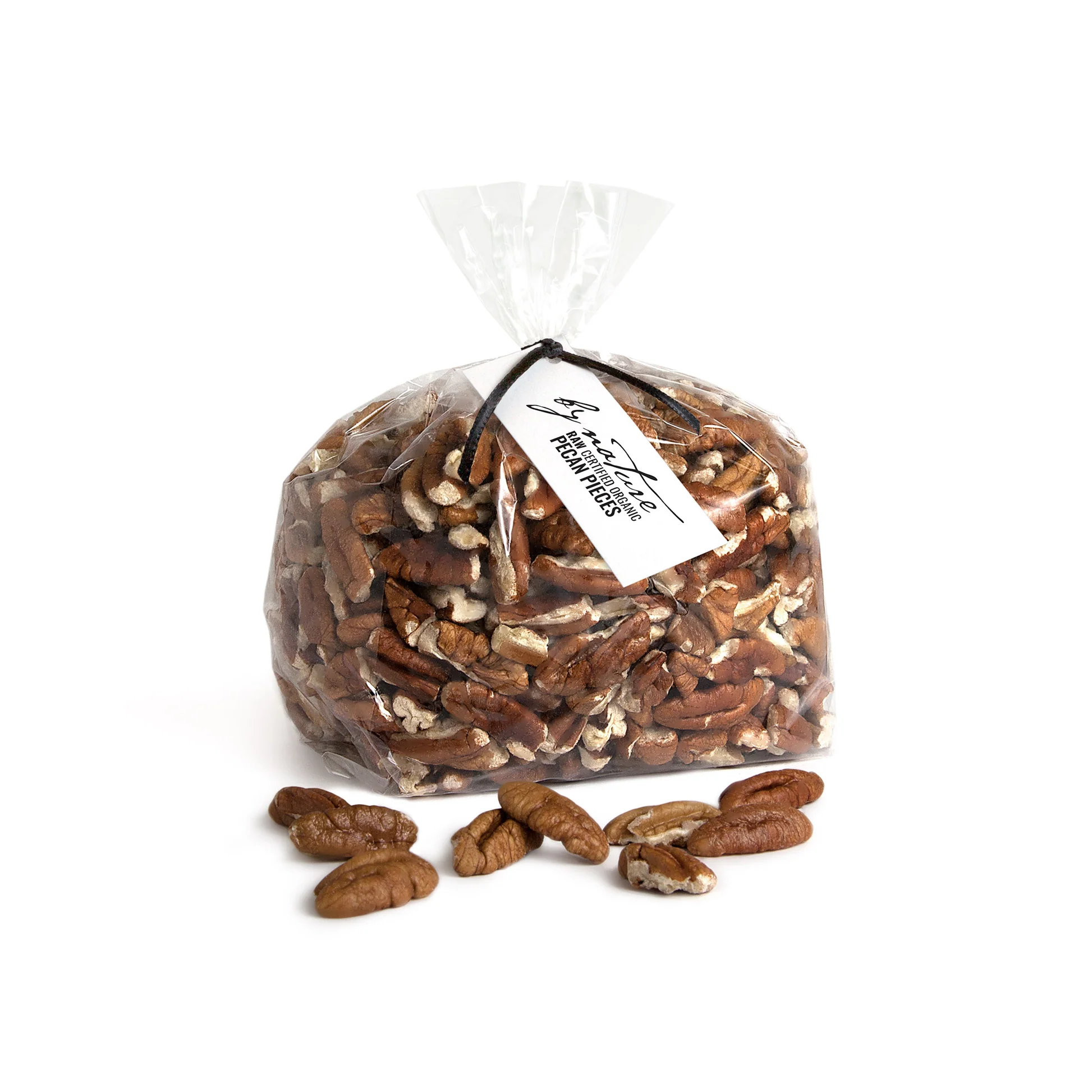
By Nature – Organic Raw Pecan Pieces 500g
R354.83
ORGANIC RAW NUTS
Healthy fats, fibre, plant-based protein,
and antioxidants, supporting heart health,
sustained energy, and overall wellness
Sourced locally in South Africa
3 in stock
Description
By Nature Organic Raw Pecan Pieces 500g are certified organic, unroasted pecans that are minimally processed to preserve their natural nutrients and rich, buttery flavour. Sourced locally in South Africa, they provide a wholesome combination of healthy fats, fibre, plant-based protein, and antioxidants, supporting heart health, sustained energy, and overall wellness. Their convenient “pieces” form makes them ideal for baking, cooking, smoothies, or everyday snacking, offering a clean, natural, and versatile addition to a balanced diet.
🧪 Ingredients:
- Organic pecan nuts (certified organic at source)
Allergens:
- Tree nuts
- Packed in a facility that may handle sesame seeds
💪 Key Benefits:
❤️ Heart Health
- High in good fats that may help support healthy cholesterol levels
⚡ Sustained Energy
- Combination of fats, protein, and fibre helps keep you fuller for longer
🧠 Antioxidant Support
- Rich in antioxidants that help combat oxidative stress
🌱 Clean Eating
- Certified organic, free from additives and preservatives
🌿 Nutritional Profile:
Pecans are a nutrient-dense superfood, offering:
- Healthy monounsaturated fats (heart-supportive)
- Plant-based protein
- Dietary fibre for digestion
- Rich in:
- Vitamin A & E (antioxidants)
- Zinc & calcium (immune & bone health)
- Potassium (fluid balance & muscle function)
🍽️ Uses & Applications:
🥧 Baking
- Ideal for:
- Pecan pies
- Cookies, muffins, cakes
- Granola and energy bars
🥗 Cooking
- Add to salads, oatmeal, or savoury dishes for crunch
🥜 Snacking
- Eat as-is or lightly toast at home
🥤 Smoothies
- Blend for a creamy texture and added nutrition
🥜 Brief History of Pecan Nuts:
Pecans come from the pecan tree, which is native to North America, particularly regions of the southern United States and northern Mexico. They were widely used by Indigenous peoples for thousands of years as a staple food, valued for their high energy content and long shelf life.
The name “pecan” originates from an Algonquin word meaning “a nut that requires a stone to crack,” reflecting how it was traditionally consumed. Spanish explorers encountered pecans in the 16th century and helped spread them to other parts of the world, including Europe, Africa, and Asia.
Cultivation began more formally in the 18th and 19th centuries, with improved farming methods and grafting techniques allowing for better-quality crops. Over time, pecans became an important commercial nut, especially in the United States, and were later introduced to countries like South Africa, where they are now widely grown.
Today, pecans are enjoyed globally, continuing their long history as a nutritious, versatile, and culturally significant food.
The contents of the Knysna Health website shall not be regarded as medical advice, or a basis from which to make medical decisions. The use of information found on this site is completely your responsibility and at your own risk. Our recommendation is that if you have health concerns that you feel unsure about how to deal with, that you contact your trusted health professional for personalized advice.

Reviews
There are no reviews yet.