
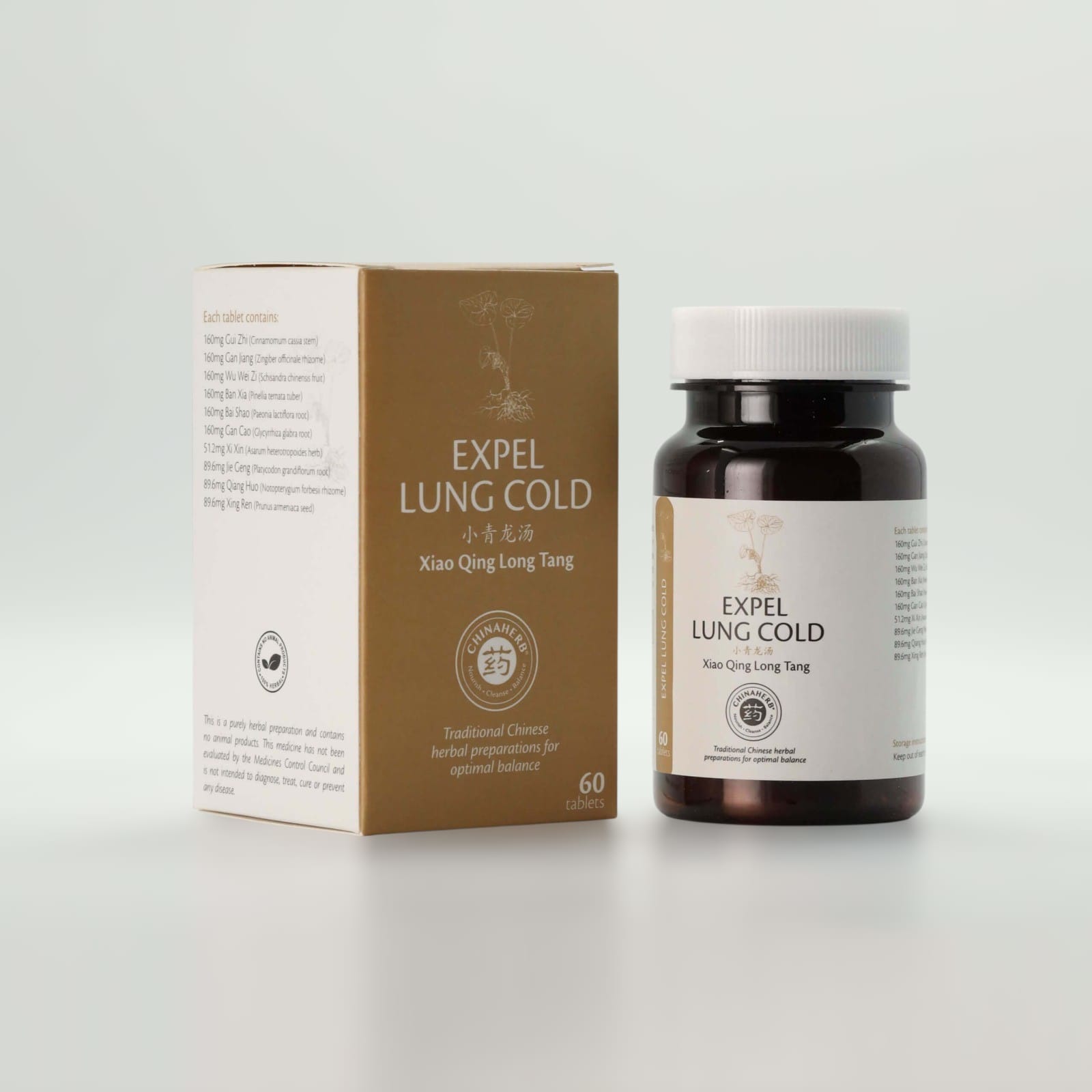
China – Expel Lung Cold 60 Tabs Nappi: 89546-007
R227.04
RESPIRATORY HEALTH SUPPORT
It is traditionally used when symptoms such as
cough, bronchitis, or asthma are associated with
clear or white, thin mucus, chest tightness, and
worsening symptoms in cold weather, working
gradually to restore balance in lung function rather
than providing immediate symptom relief.
Chinese medicine
2 in stock
Description
This Traditional Chinese Medicine formula is designed to support respiratory health by warming the lungs and helping clear cold-type phlegm. It is traditionally used when symptoms such as cough, bronchitis, or asthma are associated with clear or white, thin mucus, chest tightness, and worsening symptoms in cold weather, working gradually to restore balance in lung function rather than providing immediate symptom relief.
🌿 Key herbal ingredients:
The formula is a combination of warming and regulating herbs, commonly including:
- Cinnamon twig (Gui Zhi)
- Dried ginger (Gan Jiang)
- Schisandra fruit (Wu Wei Zi)
- Pinellia (Ban Xia)
- Licorice root (Gan Cao)
- Apricot seed (Xing Ren)
- Asarum (Xi Xin)
- Peony root (Bai Shao)
👉 These herbs work together to:
- Warm the lungs
- Transform and move mucus
- Help restore normal breathing function
💪 Traditional uses (what it’s used for):
In TCM practice, this formula is commonly used for:
🌬️ Respiratory conditions
- Cough with clear/white mucus
- Chest congestion
- Bronchitis-type patterns
❄️ Cold-type symptoms
- Symptoms that worsen in cold weather
- Feeling cold in the chest or back
🫁 Breathing difficulties
- Wheezing or asthma-like symptoms
- Tightness in the chest
⚙️ How it is understood in TCM:
In Traditional Chinese Medicine, respiratory issues are not only seen as infections but as imbalances of “Cold,” “Heat,” “Phlegm,” and “Qi”.
This formula is typically used when:
- Cold has entered the lungs
- Fluids become thick or trapped
- The body produces thin, white or foamy phlegm
- Symptoms worsen in cold weather or after cold exposure
⚠️ Important context:
- This is a traditional herbal formula, not a modern pharmaceutical medicine
- It is used based on symptom patterns, not diagnosis alone
- Not suitable for all types of coughs (especially heat-type coughs with yellow mucus)
- Should be used carefully and appropriately for the correct condition
🌬️ Brief History:
This formula is based on the classical Traditional Chinese Medicine prescription Xiao Qing Long Tang (Minor Blue Dragon Decoction), which dates back to the Han Dynasty (around 200–300 AD). It was recorded in the medical writings of Zhang Zhongjing, who is regarded as one of the foundational figures in Traditional Chinese Medicine.
Historically, the formula was developed to treat respiratory conditions described in TCM as “cold invading the lungs”, where the body produces excess clear or white mucus, coughing, and chest congestion due to internal cold imbalance rather than heat or infection alone.
Over centuries, this prescription became a standard herbal combination in Chinese medicine for managing cold-type respiratory patterns, especially in damp or cold climates. In modern times, brands such as ChinaHerb have adapted it into tablet form, making the traditional formula more accessible while preserving its original herbal composition and therapeutic intent.
The contents of the Knysna Health website shall not be regarded as medical advice, or a basis from which to make medical decisions. The use of information found on this site is completely your responsibility and at your own risk. Our recommendation is that if you have health concerns that you feel unsure about how to deal with, that you contact your trusted health professional for personalized advice.
Reviews
There are no reviews yet.